
Rapid Growth-Based Microbial Testing
From days to hours
IntuBio’s patented technology mimics the traditional cultivation method, delivering reliable Colony Forming Unit (CFU) results in hours rather than days using sophisticated optical scanning and label-free methods.
Patented Technology
Same Results, Only Faster
IntuBio’s patented technology mimics the traditional cultivation method. However, the same results are provided in hours rather than days by applying rapid growth-based microbial testing.
By providing rapid microbial analysis, IntuBio aims to revolutionize the way we approach microbiological monitoring. Our solutions are based on sophisticated optical scanning, providing label-free methods with minimal sample preparation.
Time-To-Result Comparison
IntuGrow delivers results up to 10x faster, enabling same-day corrective actions before production impact or product release delays occur.
The Process
How IntuGrow Speeds Up Your Lab
Unlike other rapid methods that destroy samples or require expensive fluorescent tags, IntuGrow is completely label-free and non-destructive.
The Process
How IntuGrow Speeds Up Your Lab
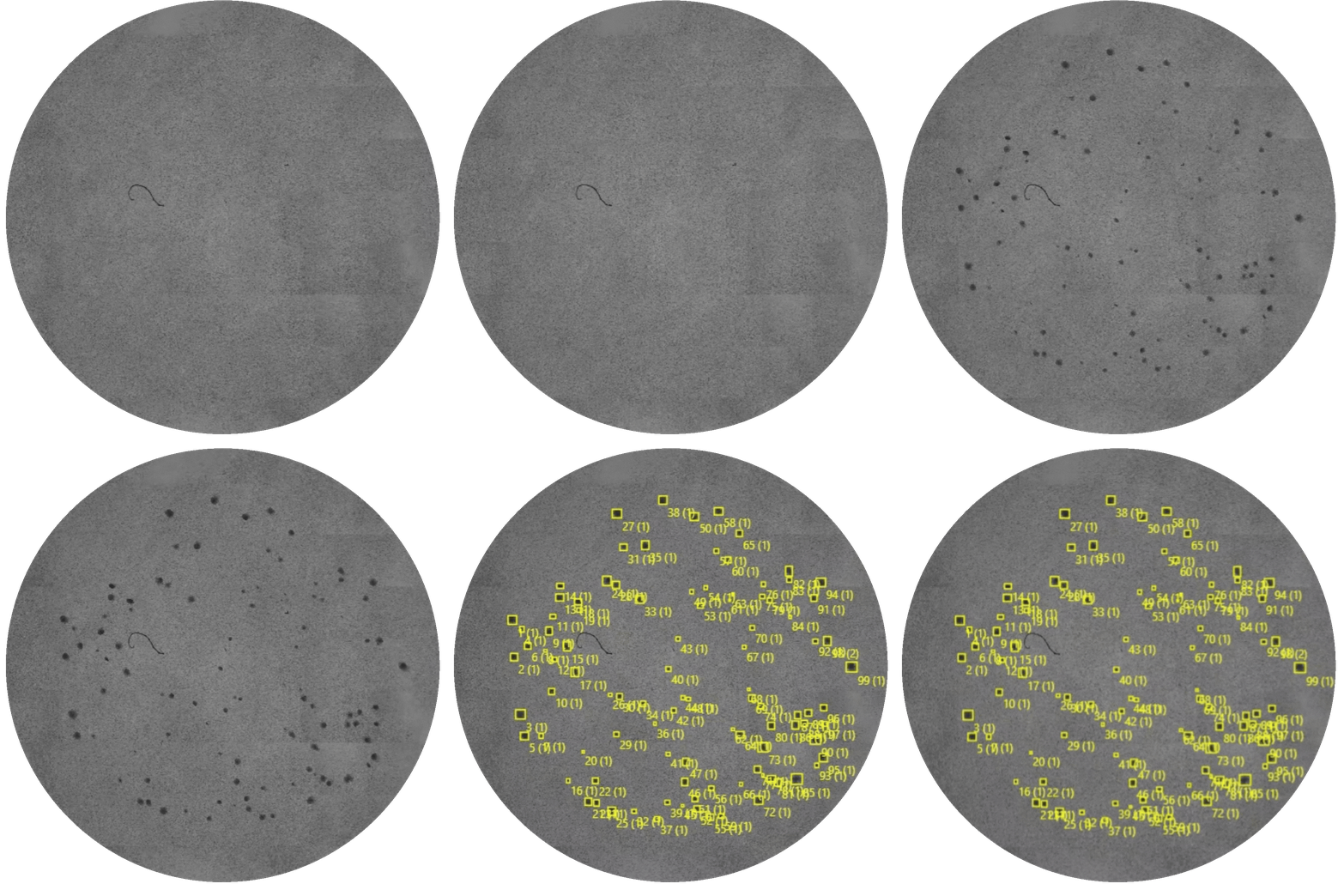
IntuGrow integrates seamlessly into your existing workflow, replacing slow manual incubation and counting with automated, continuous optical tracking.
Unlike other rapid methods that destroy samples or require expensive fluorescent tags, IntuGrow is completely label-free and non-destructive.
Sample Preparation
Minimal preparation required. Samples (APIs, water, swabs, or complex products) are filtered or loaded directly into standard 12- or 6-well microtiter plates. No special reagents or labels are needed.
Continuous 3D Optical Scanning
The plate is placed inside the IntuGrow scanner (or combined with the Mini-Incubator). The patented high-resolution 3D optical system scans the wells at regular intervals, capturing microscopic changes.
Automated Colony Tracking
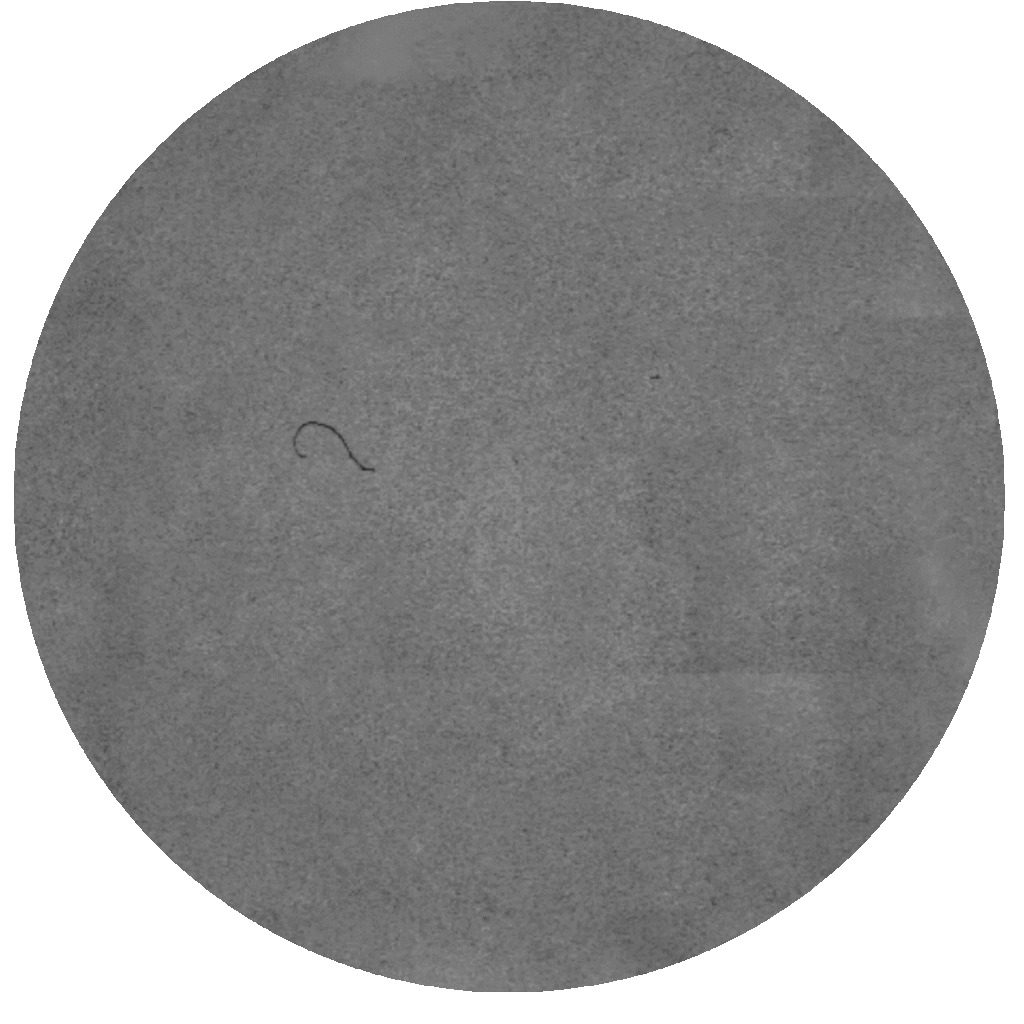
IntuGrow’s advanced software algorithms analyze the time-lapse images in real-time. It automatically distinguishes growing microbial colonies from non-moving product debris or background fibers.
Real-Time CFU Results
Get definitive CFU/volume results in hours rather than days. The software displays growth curves, time-lapse videos of colony formation, and generates audit-ready reports automatically.
Applications
Explore the opportunities with rapid growth-based microbial testing
Customer Story
See Our Latest Customer Story
A leading pharmaceutical manufacturer detected microbial contamination in their production lines during routine rinse water analysis.
By implementing the IntuGrow system, they were able to identify the source of contamination, isolate the affected line, and verify the sanitization process in hours instead of waiting 5 days for traditional plate counts. This saved millions in potential downtime and product waste.
Customer Story
Lorem ipsum dolor sit amet
Consectetur adipiscing elit. Fusce lobortis augue ut dolor aliquam blandit. Mauris blandit vehicula justo, eu dapibus eros rhoncus eu.
Proin ornare enim vitae purus gravida, eu tristique augue pretium. Pellentesque leo odio, finibus vitae scelerisque eget, dapibus id magna. Sed lobortis id libero et vehicula. Fusce volutpat finibus leo, a volutpat nunc lacinia sit amet. Cras gravida tincidunt arcu, in tempus neque laoreet at.
Customer Story
Cras pretium ullamcorper
Lectus, nec faucibus ante tempus ac. Suspendisse volutpat tincidunt augue, id bibendum sem commodo imperdiet. Aliquam erat volutpat. Aenean laoreet odio sapien, in tincidunt enim congue blandit.
Pellentesque ut risus commodo nibh varius sollicitudin. Aenean vel sodales lacus. Class aptent taciti sociosqu ad litora torquent per conubia nostra, per inceptos himenaeos. Sed et dolor vehicula, posuere urna eget, maximus sem. Nam quis leo finibus, pharetra urna id, ultrices orci. Sed nulla felis, egestas non eleifend porttitor, dignissim sed nulla.
FAQ
Frequently Asked Questions
How does IntuGrow provide CFU results faster than traditional methods?
How easy is it to set up IntuGrow in my current lab environment?
Extremely easy. The IntuGrow system has a very small footprint (450 x 260 x 250 mm) and is designed to operate on a standard laboratory bench or inside a laminar air flow (LAF) hood. It uses standard microtiter plates and requires minimal sample preparation, making integration seamless.
Is IntuGrow compatible with various sample types?
Yes. The adaptable design enables analysis on a broad range of sample types, including active pharmaceutical ingredients (APIs), complex intermediate products, process water, environmental swabs, and food or beverage matrices.
Can IntuGrow handle varying sample volumes?
Yes. By utilizing our filtration-based sample preparation, IntuGrow can process sample volumes ranging from 1 ml to 200 ml, ensuring compliance with standard regulatory volume requirements.
What is the level of detection using IntuGrow?
IntuGrow has a detection limit of 1 CFU per sample volume. Since it mimics traditional cultivation, if a single viable microorganism is present and grows, the optical scanning system will detect it.
Does IntuGrow provide automated colony counting?
Yes. The IntuGrow software features advanced image processing algorithms that automatically identify, track, and count growing colonies in real-time, eliminating human error and subjectivity in colony counting.
Is the IntuGrow solution non-destructive?
Yes, the method is non-destructive and label-free. Because it does not require any fluorescent dyes, reagents, or destructive lysis, the cultured microorganisms remain fully viable and can be recovered for downstream identification or PCR analysis.
Is the software 21 CFR Part 11 compliant?
What type of consumables are required for IntuGrow operation?
IntuGrow utilizes standard, commercially available 12-well and 6-well microtiter plates, along with standard membrane filters. There are no expensive proprietary reagents or specialized cartridges required, keeping operating costs low.
Can IntuGrow analyze for molds and yeasts?
Yes. The optical scanning system detects a broad range of microbial life, including rapidly growing bacteria, slow-growing environmental isolates, yeasts (like Candida albicans), and filamentous molds.